
Poppy Playtime Chapter 4
Mob Entertainment
Installs
100K+
Developer
Mob Entertainment
-
Category
Puzzle
-
Content Rating
Teen
Developer Email
Privacy Policy
https://www.mobentertainment.com/privacy-policy
Screenshots
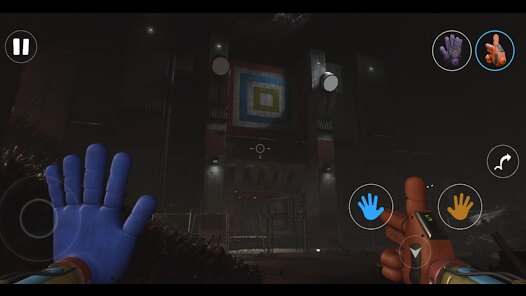
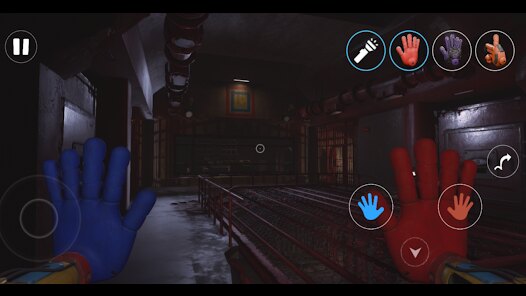
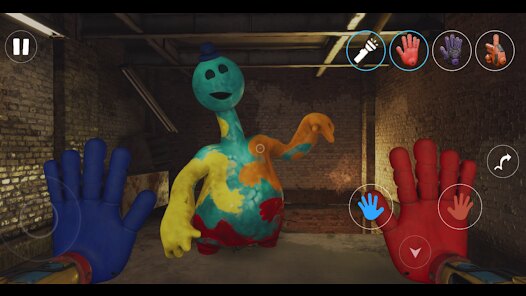
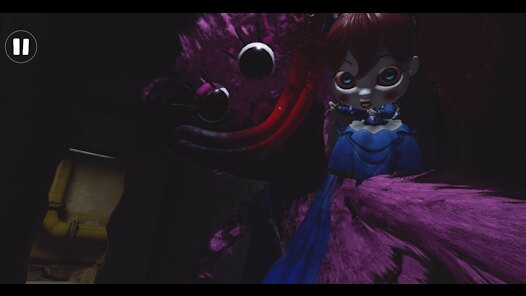
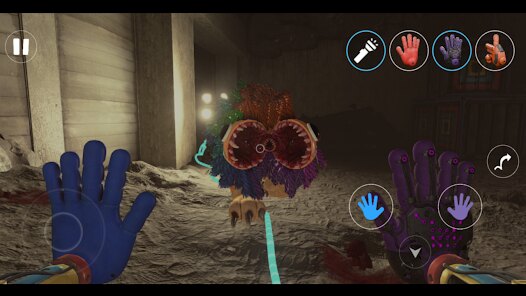
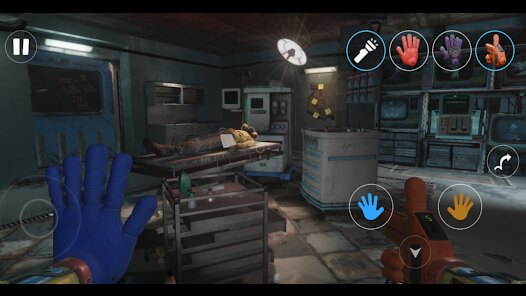
In-Depth Game Analysis
Alright, let's talk about Poppy Playtime Chapter 4. This isn't just a simple run-and-hide game anymore; it's a full-blown survival horror puzzle experience from Mob Entertainment. For the uninitiated, this is a first-person horror game that started as a pure mobile sensation on Android and iOS before blowing up on PC via Steam. Chapter 4 is the latest installment, continuing the story right where we left off in the Playtime Co. factory. You can download the entire Poppy Playtime package from the Google Play Store or the App Store, and it's free to install and get started with Chapter 1. To play Chapter 4, you need to purchase it as DLC within the app, which is pretty standard for episodic horror games. The install numbers are massive, well over 50 million downloads on Android alone, proving that the creepy-crawly Grabbot and Huggy Wuggy have a serious fanbase. The base game is free to download, but expect in-app purchases for the chapters, typically ranging from $1.99 to $4.99 each depending on sales. Yes, there are ads, but they're mostly for other Mob Entertainment games or optional reward-based ads, nothing that breaks the immersion mid-chase.
Playing Poppy Playtime Chapter 4 feels like a massive step up from the earlier chapters. The core gameplay loop is familiar: you explore dark, industrial environments, solve environmental puzzles, and avoid getting caught by the terrifying toys. But this time, the puzzles are more integrated with the lore. You're not just flipping switches; you're rewiring old machinery or using the upgraded GrabPack to manipulate the environment in creative ways. The best part? The atmosphere. Mob Entertainment has seriously nailed the feeling of descending deeper into a decaying, once-joyful factory. The sound design is incredible, with distant clanking, muffled whispers, and the groaning of old metal. My favorite part has to be the new antagonist, The Doctor. He's a giant, grotesque toy that feels like a real stalker-style enemy. Unlike Huggy Wuggy who just rushes you, The Doctor patrols specific areas, forcing you to plan your routes and manage your panic. It's a more strategic kind of horror that kept me on edge for hours.
Compared to games like "FNAF: Security Breach" or "Bendy and the Ink Machine," Poppy Playtime has its own unique flavor. Security Breach feels more arcade-y with its massive open mall and laser tag sequences, while Bendy is all about that 1930s cartoon aesthetic. Poppy Playtime, especially Chapter 4, leans hard into the "unsettling industrial nightmare" vibe. The toys aren't just jump scares; they have genuine character and backstory that unfolds through audio logs and environmental storytelling. I'd recommend it over other games because the puzzle design feels more hands-on. You're not just watching a cutscene and then doing a simple task. You physically use the GrabPack to swing, pull, and interact with every object. It feels tangible. Plus, the mobile controls are surprisingly tight. I've played it on both my Pixel phone and a tablet, and the touch controls are responsive without being frustrating. It's one of the few horror games where I actually prefer the mobile version for portability, even if the PC visuals are sharper.
Core Gameplay Features
- Upgraded GrabPack Mechanics 🤖 The core tool returns with new abilities. You can now charge your pulls to lift heavier objects or create temporary ziplines across gaps. This isn't just a gimmick; it's central to solving multi-step puzzles that feel rewarding rather than tedious.
- The Doctor AI 🧠 The main villain isn't just a scripted chase sequence. The Doctor stalks you through a massive industrial hub, adapting to your hiding spots. He has distinct patrol paths that change based on how much noise you make or how often you use your flashlight. It's a huge leap over the linear chases in FNAF: Security Breach or the predictability of Bendy's Ink Demon.
- Environmental Storytelling 📜 Chapter 4 dives deep into the lore of Playtime Co. You'll find audio logs that flesh out the scientists' experiments and the toys' origins. The level design itself tells a story, from a flooded train station to a crematorium used for "disposal." It gives context to the scares, which is something similar games often miss.
Strengths & Highlights
- Challenging Puzzle Variety 🧩 Unlike "Hello Neighbor" which relies on clunky trial-and-error, Poppy Playtime Chapter 4 offers logical puzzles. You'll decode morse code, align rotating gears, and manage power grids. Each puzzle feels unique and integrated into the horror, not just a mini-game distraction.
- Consistent Lore Building 📖 The story of Poppy and the "Bigger Bodies" initiative finally gets deeper connections. As a long-term player, I appreciate how Chapter 4 answers old questions while raising new ones. It rewards you for paying attention, unlike "Dead by Daylight" which often ignores its own narrative.
- High Replayability for Collectibles 🎁 There are hidden VHS tapes, notes, and prototype toys to find. Finding everything unlocks lore entries and cosmetic items for the main menu. This gives you a reason to replay the chapter, even if you know where all the scares are. It adds good value for a $4.99 download.
Limitations to Consider
- Occasional Performance Drops on Older Devices 💻 On my Samsung Galaxy A52, I noticed frame stuttering during the train sequences with multiple moving parts. The game is optimized well for newer flagships, but budget Android phones might struggle with the lighting effects. It's not unplayable, but it's noticeable.
- Short Chapter Length ⏳ For a $4.99 purchase, the main story run is about two to three hours on a first playthrough. While the puzzles are solid, I wish there was a little more content or a boss rush mode. Compared to "Little Nightmares" which offers a longer campaign for a similar price on mobile, this feels slightly lean.
- Limited Enemy Variety 👾 You mostly face The Doctor and a few types of smaller toy minions. The earlier chapters had more distinct enemy types like Huggy Wuggy and Mommy Long Legs. I hope future chapters bring back that variety, as facing the same stalker enemy for an entire chapter can feel repetitive by the end.
Recommended Apps
![]()
Keyboard Escape: Speed Parkour
PakGamerz0
![]()
Paper Doll Diary: Dress Up DIY
Bravestars Games3.6
![]()
Celebrity Twin - Funny Filter
CEM SOFTWARE LTD4.3![]()
Jurassic World™: The Game
Jam City, Inc.4.1![]()
Soccer Cup 2023: Football Game
INLOGIC SPORTS - football tennis golf soccer4.1![]()
MiniGiants.io
Night Steed S.C.4.4![]()
Meccha Chameleon
PlayLand Studio0![]()
IQ: The Impossible Quiz
Incradiator Games0![]()
How to Fish Adventure Game
Aromex Cowanta0![]()
Santa Tracker - Track Santa
SaviorCode Apps4.2![]()
MECCHA CHAMELEON
PlayLand Studio0![]()
Need for Speed™ No Limits
ELECTRONIC ARTS4.4![]()
Spot 5 Differences: Find them!
ProGamesLab4.6![]()
Prediction Filter Challenge
GjangHa2.5![]()
FPS Strike Ops : Modern Arena
FPS Shooter & Action Game4.5








You May Like
-
![]()
Gangster City: Mafia Crime
NitroTech Studio3.5 -
![]()
Dinosaur Universe
Supercent, Inc.4.4 -
![]()
Halloween: Secret of Shadow
HFG Entertainments4.5 -
![]()
FamilySearch Memories
FamilySearch International4.6 -
![]()
Kingshot
Century Games PTE. LTD.4.5 -
![]()
Hair Salon Fashion for Girl
Happy Run3.3 -
![]()
Gabbys Dollhouse: Games & Cats
Play Piknik4.1 -
![]()
Cry Babies
IMC Toys4.2 -
![]()
ZENONIA® 5
Com2uS Holdings Corporation4.4 -
![]()
Choo Choo Spider Monster Train
lulugamez2.1 -
![]()
Talking Tom Hero Dash
Outfit7 Limited4.3 -
![]()
Smashing Four: PvP Hero bump
Geewa4.1 -
![]()
Prediction Filter Challenge
GjangHa2.5 -
![]()
Free Fire
GARENA INTERNATIONAL I4.3 -
![]()
Brawl Stars
Supercell4.3